
Green Wire Nuts with a Hole: How to Use Ground Wire Connectors the Right Way
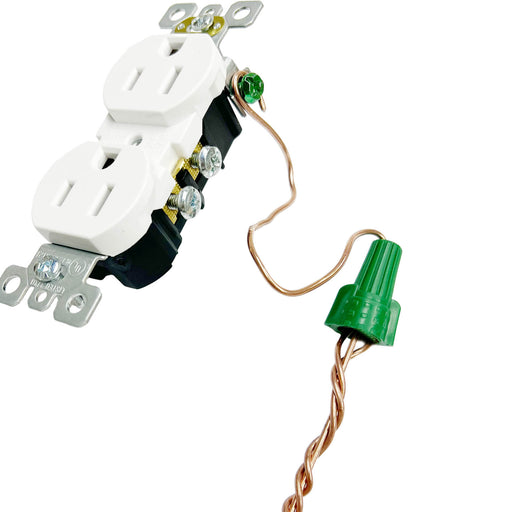
Quick answer: A green wire nut with a hole is a twist-on connector made only for equipment grounding conductors. You twist the bare or green ground wires together inside it, and one longer ground conductor passes out through the hole at the tip so it can continue to the device or the box ground screw. That single step creates the ground splice and the ground pigtail at the same time, which is why electricians use them in almost every device box.
This guide covers what the green color and the hole are for, what the NEC requires for ground splices in a box, how to install one step by step, how to read capacity, and the mistakes inspectors catch most often.
Need them by the box for a job? See Dicio Green Ground Wire Connectors with Hole (14–10 AWG) or the 5,000-piece contractor box. Electricians and supply buyers can get a free P99 sample and trade pricing.
What Makes a Green Wire Nut Different
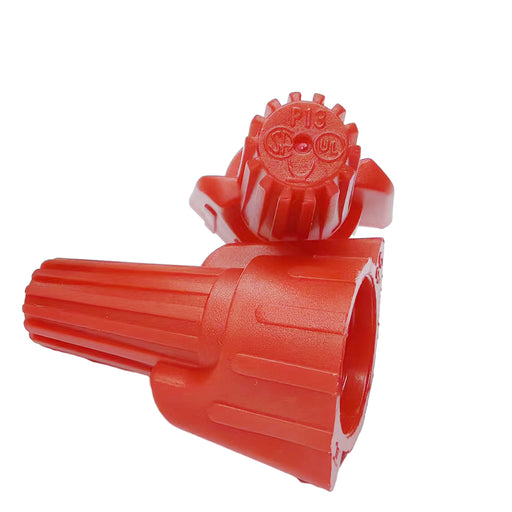
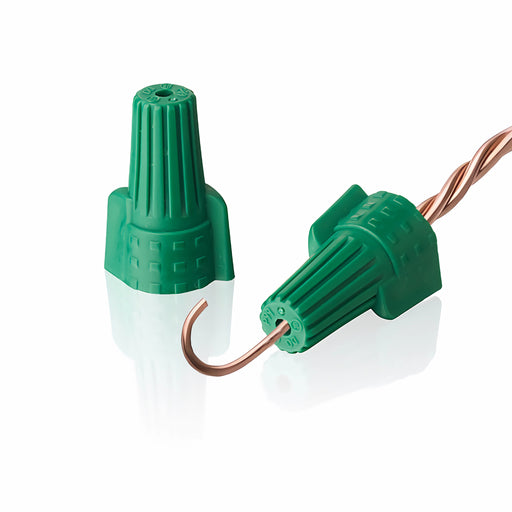
From the outside, a green ground wire nut looks like any winged twist-on connector. Two details set it apart.
The green color tells everyone it is a ground splice
NEC 250.119 requires insulated equipment grounding conductors to be green, green with yellow stripes, or bare. A green connector follows the same convention. When the next electrician opens the box, the ground splice is obvious at a glance and never gets confused with a neutral or hot splice.
The hole in the top lets one conductor pass through
The opening in the tip is the feature people search for most ("wire nut with hole in top"). It lets one ground conductor run straight through the connector instead of ending inside it. That pass-through conductor becomes the pigtail that lands on the receptacle, switch, or fixture ground terminal, or on the box grounding screw.
Without the hole, you would need a separate short jumper wire twisted into the splice to make a pigtail. The hole removes that extra piece and one extra conductor from the connector's fill.

They are for grounding conductors only
Green connectors with a hole are designed and marked for equipment grounding conductors. Do not use them on hot or neutral conductors. The open tip is not meant to insulate a current-carrying splice, and the green color would mislabel the circuit.
What the NEC Requires for Ground Splices in a Box
The rules that matter here sit in NEC 250.148. Check the edition your jurisdiction has adopted, but the core requirements have been stable for several code cycles.
All grounds in the box must be connected (250.148)
When circuit conductors are spliced in a box, or terminate on a device in or on the box, the equipment grounding conductors that come with those circuits must be connected inside the box or to the box. Splices follow 110.14(B), with one difference: the ground splice does not need to be insulated.
Removing a device cannot break the ground path (250.148(B))
The grounding arrangement must let you remove a receptacle, luminaire, or other device without interrupting ground continuity for anything downstream. This is the reason for the pigtail. If the incoming and outgoing grounds both landed directly on a receptacle's ground screw, pulling that receptacle would cut the ground to every outlet after it. Splicing all grounds together in a green connector and running one pigtail to the device keeps the path intact.
Metal boxes need their own ground connection (250.148(C))
In a metal box, the grounding conductors must also connect to the box through a grounding screw used for no other purpose, or a listed grounding device. A green connector with a hole makes this easy: the pass-through conductor goes to the box's green ground screw, and a second pigtail (or the device's own ground lead) goes to the device.
How to Use a Green Wire Nut with a Hole: Step by Step
- Turn the power off and verify it. Test with a non-contact tester or meter on a known live source first, then on the box.
- Count and size the grounds. Confirm every conductor is within the connector's range (14–10 AWG for Dicio P99) and that the combination is on the package chart.
- Pick the pass-through conductor. Choose one ground wire long enough to reach the device or box ground screw after the splice, typically the incoming ground. Leave it uncut.
- Strip to the length on the package. Strip the conductors that terminate inside the connector to the length printed on the package. Too long leaves bare copper below the skirt; too short gives the spring too little to grip.
- Feed the pass-through wire through the hole. Push it in from the open end and out through the tip, then slide the connector down so the other ground ends sit inside it, flush with the pass-through conductor.
- Twist clockwise until snug. Use the wings. Keep turning until the conductors below the connector begin to twist together. You can pre-twist the conductors with lineman's pliers for a cleaner job.
- Tug-test every conductor. Pull each wire individually. None should move or slip out.
- Land the pigtail. Connect the pass-through conductor to the device ground terminal or the box ground screw. In a metal box, make sure the box itself is also bonded (see 250.148(C) above).
- Fold the grounds to the back of the box. Tuck the ground splice behind the hot and neutral splices so it stays clear of device terminals.
Green Wire Nut Capacity: How Many Wires Fit
"Green wire nut capacity" is one of the most common questions, and there is no universal answer. Capacity depends on the connector's internal spring and is set by its listing, not by what physically fits.
- Use the chart on the package. Every listed twist-on connector is tested for specific minimum and maximum wire combinations. That chart is the only capacity number that counts for an inspection.
- Count the pass-through conductor. The wire that exits through the hole is still part of the splice and counts toward the combination.
- Mixed gauges are normal. A 12 AWG circuit ground spliced with a 14 AWG fixture ground is a typical combination, as long as it appears on the chart.
- Too many grounds? Split them into two connectors joined by a pigtail, or use a larger listed grounding connector. Never force extra conductors into one connector.
| Dicio P99 at a glance | Specification |
|---|---|
| Wire range | 14–10 AWG copper |
| Use | Equipment grounding conductors only |
| Design | Winged twist-on with pass-through hole |
| Spring | Zinc-plated square-wire spring |
| Voltage rating | 600 V |
| Listing | UL / cUL Listed for grounding (UL 467) |
| Pack sizes | 20, 50, 100, 200 pcs; 5,000 pcs contractor box |
Common Mistakes Inspectors Catch
Daisy-chaining grounds through the device
Landing two grounds under one receptacle ground screw, or using the device as the splice point, breaks the 250.148(B) continuity rule. Splice in the connector and pigtail to the device.

Forgetting the metal box
Splicing all grounds and running one pigtail to the device is not enough in a metal box. The box needs its own bond through a dedicated grounding screw or listed clip.
Using a green connector on a neutral or hot
Running short on yellow or red connectors happens on every job. A green connector with an open tip is not a substitute.
Bare copper below the skirt
Ground splices do not need insulation under 250.148(A), but long strip lengths still leave copper that can contact a device terminal. Strip to the package length.
Exceeding the combination chart
Five grounds crammed into a connector rated for four will not pass a tug test for long. Split the splice.
Using them outdoors or underground
Standard green connectors are made for splices inside boxes and are not sealed against water. For irrigation, landscape lighting, or direct-burial splices, use a sealed connector listed for the location. Our UL-listed waterproof connector installation guide covers UL 486D and UL 486G requirements.
Green Wire Nut vs. Other Ways to Splice Grounds
| Method | Best for | Trade-off |
|---|---|---|
| Green twist-on with hole | Device boxes, fast pigtails, remodel and new work | Capacity limited to the package chart |
| Standard twist-on plus separate jumper | When no green connectors are on hand | Extra conductor in the splice and one more step |
| Crimp sleeve | Many grounds in one splice; permanent work | Needs a crimp tool; not reusable |
| Lever or push-in connector | Mixed solid and stranded conductors | Bulkier in crowded boxes; check grounding listing |
Choosing Ground Connectors for Professional Work
What to check before you buy
- Listing printed on the package and the connector, not just "UL" in a product title. Counterfeit listing claims are common on online marketplaces. See how Dicio documents its approvals.
- A square-wire spring rather than round wire. It bites into the conductors and holds torque better.
- Wings sized for the hand, so you can drive the connector tight without pliers on every splice.
- A clear combination chart on the package.
Dicio green ground wire connectors
- Green Ground Wire Connectors with Hole, 14–10 AWG: 20, 50, 100, and 200-piece packs for service work and small jobs.
- Winged Ground Wire Connectors, 5,000 pcs/box (P99): contractor and distributor quantity.
Frequently Asked Questions
How do you use a green wire nut with a hole?
Feed one long ground conductor in through the open end and out through the hole, put the other ground ends inside the connector, and twist clockwise until snug. The wire coming out of the hole becomes the pigtail to the device or box ground screw.
Why do green wire nuts have a hole in the top?
The hole lets one ground conductor pass through the splice so it can continue to a device or box. It replaces a separate pigtail jumper and keeps grounding continuity when a device is removed, as NEC 250.148(B) requires.
How many wires can a green wire nut hold?
Only the combinations printed on that connector's package. Dicio P99 accepts 14–10 AWG copper conductors; check the package chart for the exact minimum and maximum combinations, and count the pass-through wire.
Can I use a green wire nut on a neutral or hot wire?
No. Green connectors with a hole are for equipment grounding conductors only.
Do ground splices need to be insulated?
No. NEC 250.148(A) says ground splices follow 110.14(B) except that insulation is not required. Using a connector still makes a reliable, inspectable splice.
Do I need a pigtail to the metal box?
Yes, when grounding conductors are spliced or terminated in a metal box. 250.148(C) requires a connection to the box through a grounding screw used for no other purpose or a listed grounding device.
What is a "greenie"?
Electricians' slang for a green grounding wire nut, usually the version with a hole in the tip.
Buying for a Crew or a Counter?
Contractors and electrical distributors can order Dicio ground connectors by the case, request free samples, and get volume pricing through the Dicio PRO program. For stocking or private-label questions, talk to our team.
This guide is general information based on the NEC. Always follow the code edition and local amendments adopted by your authority having jurisdiction, and the instructions on the product package.
Featured collection
-
Original price $11.99 - Original price $33.99Original price $11.99 - Original price $33.99Original price $11.99$9.99 - $29.69$9.99 - $29.69Current price $9.99
Winged Twist-on Wire Connector Nuts
Dicio ConnectorsIn stockOptimal Solutions for Accommodating Various Electrical Tasks Certified Quality: UL Listed (UL-486C). Versatile Application: Perfect for househ...
View full detailsOriginal price $11.99 - Original price $33.99Original price $11.99 - Original price $33.99Original price $11.99$9.99 - $29.69$9.99 - $29.69Current price $9.99Save up to 13% -
Original price $12.99Original price $12.99 - Original price $12.99Original price $12.99Current price $9.99$9.99 - $9.99Current price $9.99
Winged Twist-on Wire Connector Nuts (30 pcs Assortment Pack)
Dicio ConnectorsOut of stockOptimal Solutions for Accommodating Various Electrical Tasks Certified Quality: UL Listed (UL-486C for wire nuts, UL467 for ground connectors). V...
View full detailsOriginal price $12.99Original price $12.99 - Original price $12.99Original price $12.99Current price $9.99$9.99 - $9.99Current price $9.99Sold out -
Original price $19.99 - Original price $26.99Original price $19.99 - Original price $26.99Original price $19.99$16.99 - $22.99$16.99 - $22.99Current price $16.99
None-Winged Twist-on Wire Connector Nuts
Dicio ConnectorsOut of stockOptimal Solutions for Accommodating Various Electrical Tasks Certified Quality: UL Listed (UL-486C). Versatile Application: Perfect for househ...
View full detailsOriginal price $19.99 - Original price $26.99Original price $19.99 - Original price $26.99Original price $19.99$16.99 - $22.99$16.99 - $22.99Current price $16.99Sold out -
Original price $8.99 - Original price $22.99Original price $8.99 - Original price $22.99Original price $8.99$6.99 - $19.99$6.99 - $19.99Current price $6.99
Dicio Ceramic Wire Connectors (50 pcs, 22–14 AWG) — Heat-Resistant, Twist-On for Ovens
Dicio ConnectorsIn stockBuilt for high heat. Trusted in ovens, HVAC, and heavy-duty appliances, these ceramic wire connectors provide safe, tool-free wiring for 14–22 AWG ...
View full detailsOriginal price $8.99 - Original price $22.99Original price $8.99 - Original price $22.99Original price $8.99$6.99 - $19.99$6.99 - $19.99Current price $6.99Save up to 15% -
Original price $12.99 - Original price $37.99Original price $12.99 - Original price $37.99Original price $12.99$8.99 - $33.00$8.99 - $33.00Current price $8.99
Green Ground Wire Connectors with Hole – Winged, UL-Listed, 14–10 AWG | Dicio
Dicio ConnectorsIn stockDicio’s green ground wire nuts make grounding fast, secure, and code-compliant. Designed for 14–10 AWG conductors, these winged caps offer a strong...
View full detailsOriginal price $12.99 - Original price $37.99Original price $12.99 - Original price $37.99Original price $12.99$8.99 - $33.00$8.99 - $33.00Current price $8.99Save up to 13%